Because prevention must be visible before an emergency happens.
LakeSafe was created to reduce preventable drowning incidents by making open-water safety easy to understand for kids, adults, and visitors through clear signage, life-jacket access, rescue readiness, and community education. Most drowning incidents are preventable and rarely happen from a single cause.
If lakes are part of everyday life, safety needs to be part of everyday life too, starting before we even arrive at the water’s edge.
Mudra Machewad
Youth Advocate and Founder, LakeSafe Initiative
Mudra founded the LakeSafe Initiative after water drowning incidents made the risks of open water feel very close to home.
Earlier last summer, a boat carrying neighbors unexpectedly flipped on Lake Sammamish. Her father, who does not know how to swim, was nearby and shaken watching how quickly the situation escalated. Thankfully, quick action from others prevented a tragedy. Just weeks later, a separate drowning in the lake deeply impacted the community.
Conversations in schools, neighborhoods, and homes reflected shared grief and a shared question: how can we prevent this?
“I realized I didn’t want water safety to be something we only talk about after a tragedy. If lakes are part of our everyday life, safety needs to be part of everyday life too.”
The reality behind the risk
Drowning is not a freak accident. It is a preventable public health issue. Most incidents involve multiple missed opportunities, and strengthening layers of protection helps stop the chain of events before it reaches the water.
For every child who dies from drowning, 7 more receive emergency care for non-fatal drowning injuries. Nearly 40% of those require hospitalization or transfer for further care, and many face long-term disability. Open water can look calm and familiar, but it changes fast. Prevention starts before you arrive, and every layer of protection saves lives. CDC Summer Swim Safety
Swim lessons build skills, but lakes are different
Swim lessons build essential skills, but lakes and open water bring different risks: sudden drop-offs, cold temperatures, hidden hazards, and changing conditions that many families may not fully anticipate. Washington lakes can stay dangerously cold even on warm days. Cold water shock can cause sudden gasping, panic, and loss of muscle control within seconds, putting even strong swimmers at serious risk.
- Clear, kid-friendly safety information at the shoreline
- Access to life jackets near open water, at no cost
- Visible rescue tools where seconds matter
- Consistent education that people actually remember
- Cold water shock awareness: warm air does not mean warm water
- Simple “before you go” preparation families can act on
- Awareness that alcohol and substances significantly raise drowning risk
- Symbol-first, multilingual signage for hazards and safe zones
- Life-jacket loaner stations stocked with infant, youth, and adult sizes
- Rescue readiness with throw devices and clear posted guidance
- Community outreach: events, flyers, school support, short videos
- Practical resources that start before the water’s edge
- Substance-aware prevention messaging in all community education
- A coordinated partner network across agencies, schools, and nonprofits
A coordinated, community-wide approach
LakeSafe takes a prevention-first approach by bringing visible, accessible water-safety education into lakes, parks, beaches, and public spaces before emergencies occur. Drowning incidents are rarely caused by one factor; they often happen when multiple preventable gaps align.
“I realized I didn’t want water safety to be something we only talk about after a tragedy. If lakes are part of our everyday life, safety needs to be part of everyday life too.”
As a youth-led initiative, Mudra serves as a community advocate and coordinator, working in collaboration with Washington State Parks, local parks departments, public health agencies, fire and rescue, schools, and community organizations including the Sammamish Community YMCA. Together, building a coordinated approach that centers prevention, equity, and education.
“The heart to serve, the call to lead, and the courage to engage. That is service leadership.”
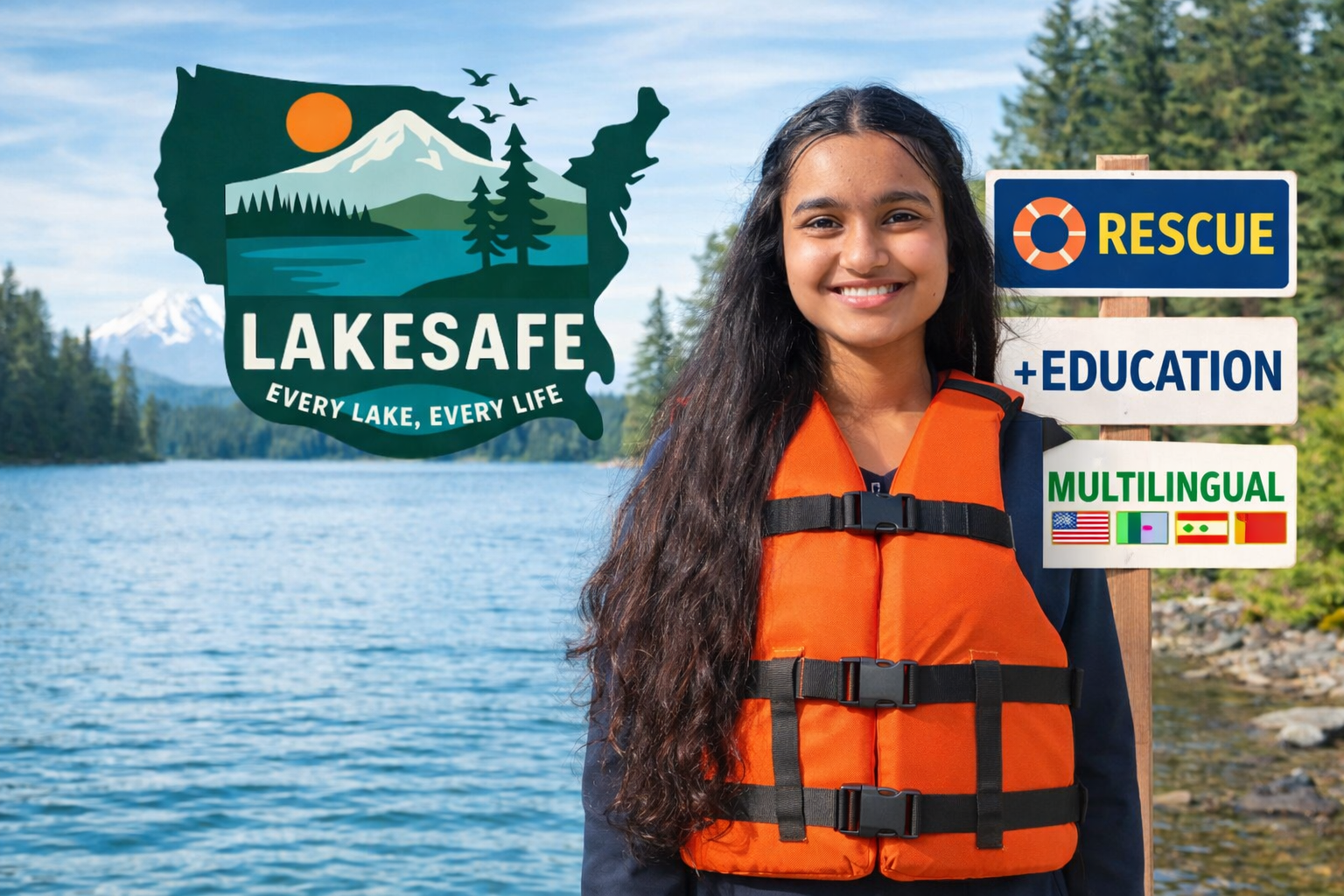
Mudra Machewad
Founder and Youth Lead
LakeSafe Initiative
Quotes and stories from the partners doing the work
“Effective prevention keeps the community as a whole in mind by coordinating efforts, having a multidisciplinary approach, and having a common purpose.”
“Our lakes and rivers are the Northwest’s gifts. To enjoy them safely, we need to be smart, know how to use them, and be prepared. All that starts before we even arrive at the water’s edge. For every incident, there are multiple steps that could have prevented it. It takes an informed and prepared community, family, and individual to keep us having fun safely.”
“Water safety is about more than swim skills. It’s about community responsibility.”
“You are doing incredible work to help make communities safer and I appreciate you and the LakeSafe initiative.”
“Having been a lifeguard instructor, swim coach, aquatic manager and drowning prevention researcher for over 40 years, I know the importance of lifejackets, lifeguards, safe swim beaches and pools, knowing how to swim and knowing water safety. They are some of the most cost-effective injury prevention items that exist. Boating safety is swim safety and vice versa. I appreciate our collective impact, and thank you LakeSafe, for your important education, advocacy and work on this important issue.”
“Our community is very grateful to you for leading this important initiative. The effort to install clear signage, life jacket access, rescue readiness and community education will make our lakes and rivers safer for all to enjoy. When I first moved to Issaquah, I was surprised that there were no lifeguards at our State Park. As a mother of young children, I was reluctant to let them enter the water, even low levels. I believe that the efforts you have proposed will provide us with more safety and the opportunity to more fully enjoy our beautiful parks and waterways.”
“Strong communities invest in prevention. When we teach young people how to make healthy choices, whether that means avoiding substance use or staying safe on the water, we empower them to enjoy life while protecting themselves and their friends.”
“Educating our users on the risks and how to be safe is very important, for the children but also for adults in the community. LakeSafe is important because it educates and sends the message not only to our local community but to our visitors, that there are risks involved when you’re enjoying the water.”
“Almost every community has lakes and even though the lake is right in your neighborhood and it might seem safe, you can quickly get into a place where you are in over your head. Water safety is an essential life skill, and we should make sure that every person understands it.”
“No drownings is possible and absolutely the target. What she’s talking about is prevention, and the best way to prevent drowning is prevention. Once somebody gets in the water, survival rates are not great.” (Watch)
“Safety is cool. No matter your skill, the water is cold. Be prepared and enjoy the amazing outdoors we have here.” (Watch)
“Wear the life jacket. Wear the helmet. Because we want you coming home.” (Watch)
“I hope someday our emergency responders will not have to make a run to the lake to save somebody. We all had other things to do on Friday night, and clearly you’ve been inspired to step up for this community.” (Watch)
“In 2008 to 2011 in King County, we went three years without a single child drowning. We know what’s possible.” (Watch)
“What started from tragedy has turned into meaningful action that is helping protect families and save lives throughout our region.” (Watch)
“Our job is to pull down that financial barrier. We offer free swim lessons to any child that needs it. Even if you are an adult and you have not learned how to swim, please reach out to the Y. We can help you.” (Watch)
“Remain calm and call 911 right away. Do not add to the incident. Give us landmarks: a buoy, a dock, a sign. That information is the difference between a search and a rescue.” (Watch)
“This is probably all of your park as much as it is our park. It is important for us to provide education and the safest recreational experience we can.” (Watch)
“Swimming is a life skill. We should all learn how to swim, whether we are children or adults. As I review the tragic cases of preventable drownings, I always think about my family.” (Watch)
“This kind of action doesn’t end in this room. It continues by us keeping the conversation going at our organizations.”